

Jerusalem Post
PESACH BENSON/TPS
“The goal was to understand what’s really happening when carbonate rocks encounter high levels of carbon dioxide,” the study’s lead researcher explains.
Scientists in Israel have developed a method to accelerate a natural process that normally takes thousands of years, reducing it to hours.
By running carbon dioxide and seawater through common rocks such as limestone and dolomite, they created a laboratory system that locks the gas in dissolved form before it can escape into the atmosphere.
This breakthrough could help power plants and industrial facilities reduce their emissions.
“What if it were possible to take a very slow geological process and compress it into hours?” asks Noga Moran of Hebrew University, one of the study’s lead researchers. “That is exactly what we set out to do.”
In nature, atmospheric carbon dioxide dissolves in rainwater, forming a slightly acidic solution. This solution percolates through carbonate rocks such as limestone and dolomite, reacting to form bicarbonate ions, a dissolved form of carbon that rivers eventually transport to the ocean.
This process, called carbonate weathering, is one of Earth’s primary mechanisms for removing CO₂, but it occurs far too slowly to significantly mitigate modern climate change.
To accelerate it, Moran, Dr. Yonaton Goldsmith of the Hebrew University, and Dr. Eyal Wargaft of the Open University built a transparent reactor filled with these rocks and ran seawater and CO₂ through it. By doing so, they were able to control and measure the process, effectively compressing millennia of natural carbon capture into hours.
Efficiency factors on the research
The team identified key factors influencing efficiency. The CO₂-to-seawater ratio proved critical; gentle recycling of the gas improved reactions, and rock grain size affected both reaction rate and total dissolved carbon.
Dolomite appeared particularly promising because it does not form secondary carbonates that could release CO₂ back into the air. Currently, the system converts about 20% of introduced carbon dioxide into dissolved carbon, leaving significant room for engineering improvements.
“The goal was to understand what’s really happening when carbonate rocks encounter high levels of carbon dioxide,” Moran explains. “Once we figured out the conditions that allowed the process to work efficiently, we could see how something natural and slow becomes a controlled process that can be measured and tuned.”
The findings, published in the peer-reviewed journal Environmental Science & Technology, may provide a practical roadmap for replicating natural carbon capture in engineered systems, thereby helping to reduce emissions from power plants, industrial operations, and other sources of CO₂.
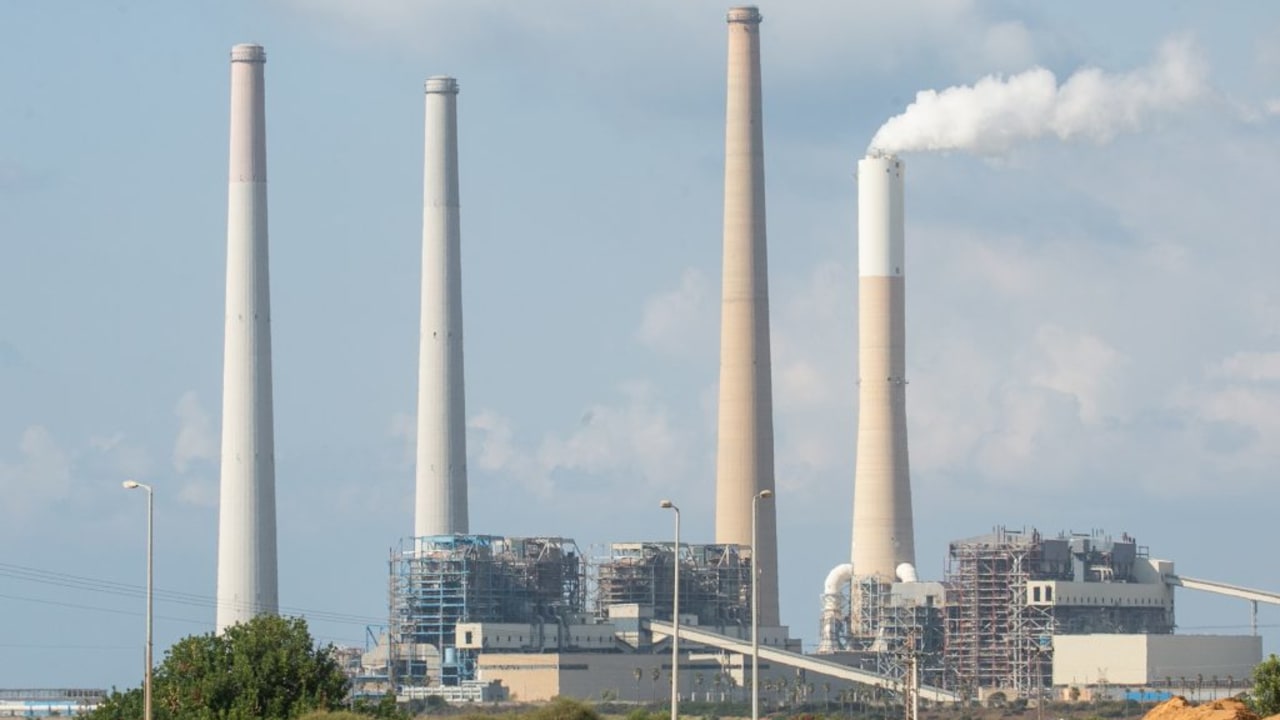
Power plants, among the largest sources of carbon dioxide emissions globally, could directly benefit from this accelerated carbon capture method.
By installing reactors that pass CO₂ and seawater through limestone or dolomite, plants could convert a portion of their emissions into dissolved carbon before they reach the atmosphere, offering a nature-based alternative to conventional capture technologies.
Industrial facilities that produce significant CO₂, such as cement, steel, and chemical plants, could also adopt this approach. The reactor system could capture carbon from process gases and convert it into bicarbonate ions, mimicking natural geological processes.
Because it relies on abundant and inexpensive materials, including common rocks and seawater, the method has the potential to be scaled and adapted across industries, thereby reducing the carbon footprint of major industrial operations.
“This approach promises that it takes something Earth has done for millions of years and makes it work at human timescales,” Moran said. “It’s an exciting step toward practical, nature-based carbon capture.”