

HAARETZ
Excavation in Jerusalem's Mount Scopus was noticed where none should be. Antiquities inspectors waited for nights and caught thieves red-handed
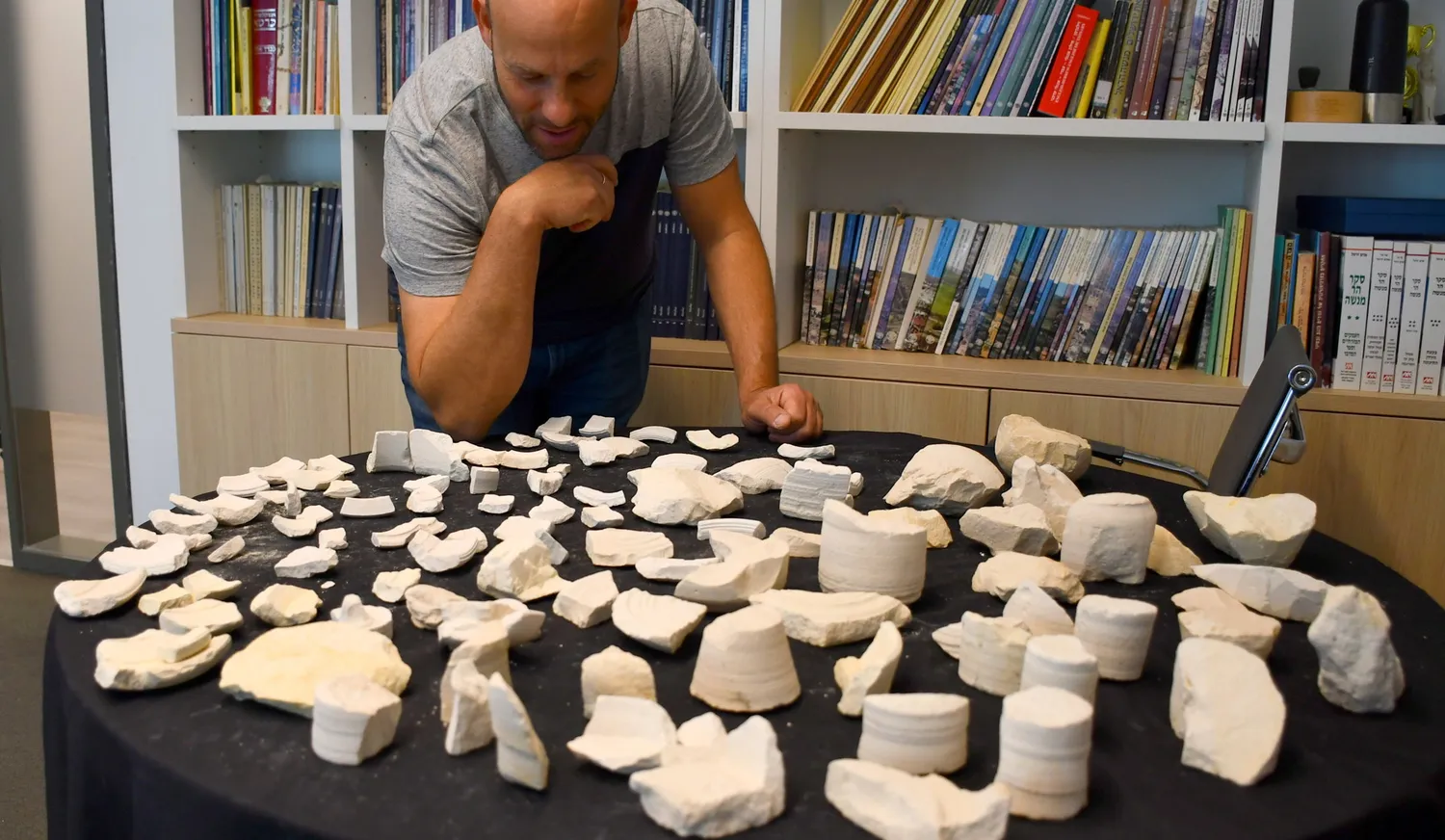
Treasures from antiquity hidden in Israel's soil are supposed to stay there until being gingerly unearthed by archaeologists, but looters have always posed serious competition. On Monday the Israel Antiquities Authority revealed the discovery of a large workshop in Jerusalem that manufactured 'Jewish' kitchenware from limestone some 2,000 years ago, thanks to thieves caught red-handed.
The would-be robbers were not slinking quietly and unobtrusively through the night, prying with shaking fingers at the cold stone. Israel's antiquities thieves are a nervy lot. The Israel Antiquities Authority says that five "alleged robbers" were arrested with extensive machinery and quarrying equipment, electricity generators and a metal detector. Actually, after their capture in situ, all confessed, says Dr. Amir Ganor, head of the IAA Theft Prevention Unit.
"Some suspects were caught underground in the cave, while others acting as lookouts and guards were apprehended above ground," the IAA stated.
In fact the doughty Theft Prevention inspectors had been lying in wait for the thieves at the site of Ras Tammim, an Iron Age spot on the slopes of Mount Scopus where water cisterns and a dovecote in a cave have previously been reported. Antiquities inspectors routinely comb the Land of Israel for signs of illegal activity and noticed that a fresh excavation had commenced there, where none had been approved.
Before breaking ground at any site in Israel, even if not for the first time – the Israel Antiquities Authority must approve the dig, and budgets and plans must be arranged. Inspectors had noticed disturbance at Ras Tammim – in other words, signs of digging where none had been approved. The antiquities inspectors lurked in wait for several nights and finally, when the robbers came back to continue the illegal excavation they had begun, they were caught in the act.
They turned out to be locals, living in East Jerusalem, Ganor tells Haaretz by telephone. "After we caught them, we realized they had exposed a Second Temple-period workshop that had been previously unknown. It's a very important discovery – we know of stoneware workshops in the Jerusalem area," Ganor says – including at Mount Scopus.
The stone serving the facility was locally sourced, he adds – the Jerusalem hills consist largely of whitish limestone and have been quarried for thousands of years. Just in 2024, yet another huge stone quarry from King Herod's time was found at Har Hotzvim ("quarriers' mountain") that may have produced the huge slabs for Herod's Temple, and for paving ancient Jerusalem's streets.
Now that it's been found, the workshop in a cave on Scopus will undergo proper excavation, Ganor promises: permits will be applied for, budgets found and so on. Meanwhile, after catching the robbers, the inspectors went into the cave and were delighted to see what it contained – the stoneware facility.
Jewish households began using stone dishes – bowls, plates, pots, cups and so on, during the Second Temple period. It began in the time of Herod the Great around 40 B.C.E. and vanished following the Bar Kochba revolt in 135 C.E. If once the practice had been thought to be mainly a Jerusalem thing, later excavations proved that it began there but spread to Jewish communities in the north as well.
Why did they do that? Apparently because Leviticus explicitly specifies that cloth, wooden or leather vessels are rendered impure by exposure to foulness such as a pig or corpse, but doesn't even mention stone dishes. The assumption was therefore that an exposed stone dish could be ritually washed and purified.
How is it that robbers found a factory in a cave in a well-trodden area like Jerusalem's Mount Scopus when archaeologists had not?
Ganor sighs. They can operate without constraints, he points out. Archaeologists are bound by laws and rules, and proper practice, seeking scholarly knowledge. Thieves are seeking filthy lucre that they can wash off and sell on the black market, and have been known to barge into sites with tractors. They can sink their shovels and backhoe anywhere they please until getting caught and therefore, have an advantage when exploring virgin sites.
That is unfortunate, not least because of the lost knowledge. "We often never knew what they found and took out, and antiquities in the soil are not a renewable resource," Ganor points out. "It's lost forever, for the rest of the world."
How much knowledge is being lost? That we can't say, but Ganor can say that this sort of thing, the IAA catching thieves in the act, happens about twice a week. "We catch more than 60 gangs a year, red-handed, and that's only within the Green Line. There are about 400 robberies a year that we don't catch," he adds – places where clearly, somebody dug illegally, and if they found anything, we can't know. All that remains is a hole of unprofessional provenance. "It's heartbreaking," he adds.
Would finding no gold, no hoards, no unique artifacts but only stone vessels – which have been found before – have disappointed the robbers? They might have had a frisson of dismay but if they'd have come across the facility's storage room of finished vessels, they could have sold them on the black market, Ganor suggests. There is a huge market for these things. But they didn't, they only found the waste, he adds.
Now that they've been caught, they will have their day in court. The penalty for robbing antiquities is up to five years' prison, but sentences normally range from community service, to half a year or a year in serious cases, Ganor says, plus a fine that factors in the damage done. Since Israel is clearly riddled with antiquities looters, how much of a deterrent is that?
"The gang that got the harshest sentence was given 1.5 years and fined 100,000 shekels," Ganor says, but considering that the family breadwinner gets locked up for any time is a hardship for the family, so there is deterrent. Why are the sentences seemingly so short, though? No room in the prisons, he suggests.
The workshop was located by the main ancient road Jewish pilgrims used to come to Jerusalem from the east, the IAA adds. Maybe the stone vessels were hawked to pilgrims, or sold as souvenirs to people ending their pilgrimage – selling goodies and schlock to pilgrims is a time-honored practice that continues to this very day.