
Jerusalem Post
ByDR. MAYA ROSMAN
The persimmon is one of the sweetest and most beloved fruits in Israel, but despite what you may think, it does not contain large amounts of sugar. Dr. Maya Rosman reveals all of its benefits.
The persimmon is one of the sweetest and most beloved fruits in Israel. Despite its very sweet taste, it contains only about 12% sugar – a relatively average figure in the world of fruits. The reason it is perceived as much sweeter is its high concentration of simple sugars that are absorbed by the palate more intensely, especially when the fruit is ripe and soft.
In terms of the glycemic index, the persimmon is in the medium–low range. This means that in the short term it does not raise blood sugar levels sharply like other fruits, but because it is sweeter, people with a tendency toward diabetes or insulin resistance sometimes fear it.
Here, there is actually an advantage: The glycemic impact can be easily reduced – combining persimmon with protein and healthy fat (natural yogurt, almonds or nuts) slows down digestion and the breakdown of sugars in the intestine, thereby causing a more gradual and moderate rise in blood sugar.
In a study published in the American Journal of Clinical Nutrition, it was found that combining carbohydrates with protein or fat significantly reduces the rate of blood sugar increase, decreases the insulin response, and prolongs the feeling of satiety.
Another study in the Journal of Nutrition showed that eating fruit together with protein-rich yogurt slowed the rate of glucose absorption by about 30% compared to eating the fruit alone.
And another clinical study on patients with type 2 diabetes found that combining nuts with fruit reduced the glycemic load of the meal and improved post-meal sugar balance.
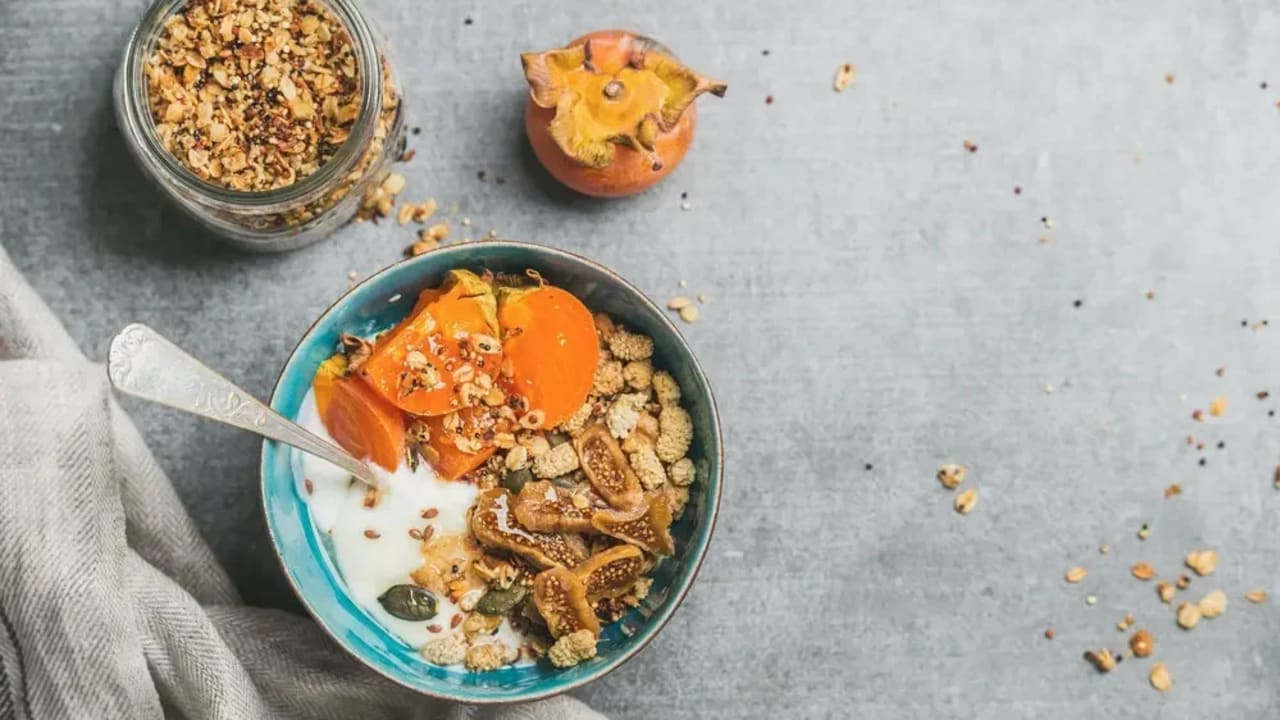
Therefore, one of the perfect ways to enjoy persimmon during the season is to cut it into small cubes and add it to tangy yogurt.
The combination of the yogurt’s tanginess with the orange sweetness of the persimmon turns the dish into a delicacy, and the delay in glycemia is clearly felt: Fewer sugar spikes, less hunger, and longer satiety.
All the benefits
One hundred grams of persimmon contain only about 70 calories. Meaning, one medium persimmon is considered a full fruit serving: An excellent solution for a snack even during periods of weight loss, as long as you don’t overdo the quantities.
Carotenoids and vitamin A
The orange color of the persimmon comes from the carotenoid family – important antioxidants that turn into vitamin A in the body. These substances support eye health, protect the skin from sun damage, and maintain proper immune system function.
Several studies have found that regular consumption of carotenoids, mainly beta-carotene and lutein, is associated with a decrease in the incidence of viral diseases and improved immune cell function. In addition, there are studies that show a connection between carotenoid consumption and reduced risk of various cancers, mainly lung cancer and gastrointestinal cancer. For example, a large study in Nutrition Reviews found that regular beta-carotene consumption was associated with reduced risk of viral diseases and improved immune system function.
Another epidemiological study in the Journal of Epidemiology found that high carotenoid consumption was associated with reduced risk of lung, gastrointestinal, and skin cancer.
Not only that – a study in the Journal of Ophthalmology showed that carotenoids such as lutein and zeaxanthin contribute to a reduction in macular degeneration and improve visual functions.
The fact that persimmon is rich in carotenoids makes it a seasonal food with a special health advantage in winter – the season in which the immune system needs strengthening.
Potassium: Supporting the heart and blood pressure
Persimmon contains a respectable amount of potassium, which is an essential mineral for proper heart muscle function, regulation of blood pressure, and maintaining proper fluid balance in the body.
A diet rich in potassium helps balance the effects of excess sodium in the diet, and therefore is especially recommended for people with a tendency to high blood pressure.
Large studies have found that a potassium-rich diet is associated with reduced risk of cardiovascular disease, and therefore persimmon can serve as a good addition, especially in winter:
• A large-scale study in the Hypertension Journal showed that high potassium intake balances excess sodium in the diet and reduces the risk of high blood pressure.
• Another study in Circulation found that higher potassium intake was associated with lower mortality from heart and vascular diseases.
Dietary fiber: Good for the intestine, less good in the peel
Persimmon is rich in dietary fiber that supports proper digestive system function, contributes to satiety, and balances the rate of sugar absorption into the blood.
But — and this is important — its peel contains a type of fiber that the body has difficulty digesting, and it can sometimes cause constipation or a sensation of blockage in the intestine, especially in people who tend to have digestive issues.
There are medical reports worldwide of the formation of hard masses of undigested fibers specifically from excessive consumption of persimmon peels: A review in the American Journal of Gastroenterology emphasized that certain fibers from persimmon peel are difficult to digest and may form insoluble masses in the intestine (phytobezoars), mainly with excessive intake.
On the other hand: A clinical study in Diabetes Care found that soluble dietary fibers reduce the rise in blood sugar after a meal and improve insulin sensitivity.
What’s the solution? Since the fruit itself contains a nice amount of fiber, you can enjoy all the health benefits even without consuming the peel. Peeled persimmon, especially combined with yogurt, should be well absorbed by the body and not cause digestive problems.
In conclusion, the persimmon is a wonderful seasonal fruit: Sweet, filling, rich in antioxidants, contributes to eye, skin and immune system health, and can fit in a balanced way even into a weight-loss diet. Maintaining a moderate quantity, peeling the fruit, and combining it with sources of protein and healthy fat can make it part of a varied and especially healthy daily menu during the winter.