

Jerusalem Post
ByDR. MAYA ROSMAN
We’re all in a tough emotional state right now. Before turning to carbohydrates (even though it’s allowed), try a few tasty sweet snacks that can calm the body and give it what it truly needs.
Why does stress make us crave sweets – and does it really calm us? I assume I’m not the only one who feels this: In a moment of tension, pressure, nerves – the mind immediately runs to carbohydrates. Pasta, chocolate, a cookie, something sweet. It makes sense and there are explanations for it: During stress, our brain looks for available “fuel.” It wants sugar, and quickly.
The reason is mainly survival-related: During stress, cortisol is secreted in the body – a hormone that prepares us to “fight or flight.” It raises blood sugar levels, increases alertness, and signals to the brain that available and quick energy is needed. The brain, which is responsible for survival, prefers fuel that is easy to digest – glucose.
Studies in Physiology & Behavior have long shown that stress increases the desire for sweets and foods high in sugar and carbohydrates, meaning this is a real physiological response, not a “lack of discipline,” but there is also an emotional side here to a certain extent.
Why Are Carbohydrates Perceived as Comforting?
For all of us, carbohydrates and sugars are considered “comforting.” The soft texture, the sweet taste, childhood memories, everything gives us a full sensory experience, and this activates the brain’s reward system (dopamine reward system), and encourages the secretion of endorphins. These give us a kind of immediate feeling of happiness.
A study published in Nutrients found that a diet rich in carbohydrates can reduce the cortisol response after a stressful situation.
The part that is talked about less is that eating sweet foods does indeed improve mood in the short term – but the effect is very short. It lasts only a few minutes.
What Is Serotonin Made Of?
There is a common myth that carbohydrates “produce serotonin,” and that is not entirely accurate.
Serotonin, the substance associated with calm, stability, and sleep – is produced in the brain from an amino acid called tryptophan. Note: Tryptophan is a protein, not a sugar. It is found in foods such as: Cheeses, chicken, fish, eggs, oats, legumes, nuts, also a little in dates and bananas.
So what actually happens? Carbohydrates cause the secretion of insulin, insulin “clears” other amino acids from the blood into muscle cells – and thus relatively more tryptophan remains that can pass into the brain and turn into serotonin. Meaning carbohydrates do not really produce serotonin, but they can accelerate its production.
It should be remembered that the amount of tryptophan in milk chocolate or wafers is relatively negligible. If we do not eat enough proteins then they have no effect.
And not only that. Carbohydrates and sugars may cause us exactly the opposite: Sweets spike blood sugar quickly: Milk chocolate, cookies, white flour – sharply raise sugar. And then comes the crash: A sharp drop in sugar levels is associated with fatigue, irritability, renewed hunger, and a feeling of “emptiness.”
Studies in Neuroscience & Biobehavioral Reviews show that high sugar consumption is associated in the long term with worsening mood fluctuations and even an increase in depressive symptoms.
In addition, and this may be the most important – chronic sugar consumption increases inflammation in the body – and chronic inflammation is linked to impaired immune system function and reduced ability to cope with stress.
Meaning – what seems like a momentary solution may deepen the stress cycle.
So What Is Better to Eat Now?
In order to expand these paragraphs with physiological and research-based information without using “empty words,” it is advisable to focus on the biochemical mechanisms – how exactly these foods affect the brain and nervous system.
A Handful of Nuts and Almonds
The magnesium in nuts (especially in almonds and cashews) acts as a “brake” in the brain. It prevents flooding of excitatory amino acids that cause feelings of anxiety and muscle tension.
In addition, the monounsaturated fat in nuts contributes to the health of the nerve cell sheath (myelin), which allows proper nerve conduction and prevents “short circuits” in stressful situations.
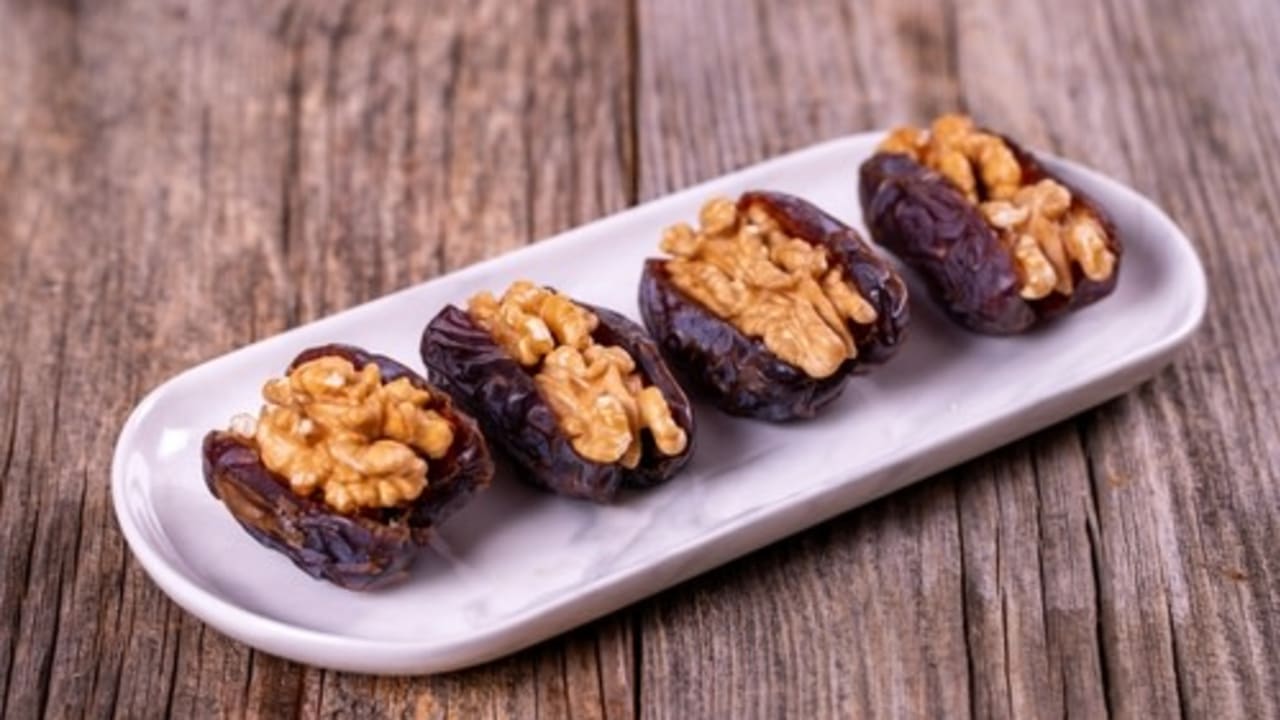
Dates with Nuts
The combination of a date and a nut is a classic example of a perfect combination: The fructose and glucose in the date provide immediate fuel to the brain (which consumes about 20% of the body’s energy, especially during stress), but the dietary fiber and fat from the nut delay the activity of the enzyme amylase. This delay prevents an insulin “roller coaster”; stable blood sugar levels mean less secretion of adrenaline – a hormone that is often secreted as a response to a sugar crash and worsens the feeling of anxiety.
Dark Chocolate (70% and Above)
Beyond flavonoids (antioxidants), dark chocolate is rich in anandamide – a substance called the “happiness molecule” that is similar in structure to natural cannabinoids in the body.
Studies show that the polyphenols in cocoa improve blood flow to the brain, which helps preserve decision-making ability and emotional control in moments of stress, instead of acting from the “amygdala” (the fear center).
Oat Bars
Oats are an excellent source of tryptophan, an amino acid that is the direct precursor to serotonin. The uniqueness of oats is their complex carbohydrate: A moderate rise in insulin helps tryptophan enter the brain more efficiently than other proteins.
The soluble fibers (beta-glucan) maintain satiety over time, which lowers levels of ghrelin (the hunger hormone) – a hormone whose high levels are directly associated with increased irritability and stress levels.
To conclude what needs to be remembered: Stress makes us crave sweets – and that is biologically logical. But the relief from sweets is very short, and sometimes the price comes later. If already a “treat” – better one that supports the body instead of spiking and crashing it.

.jpeg)