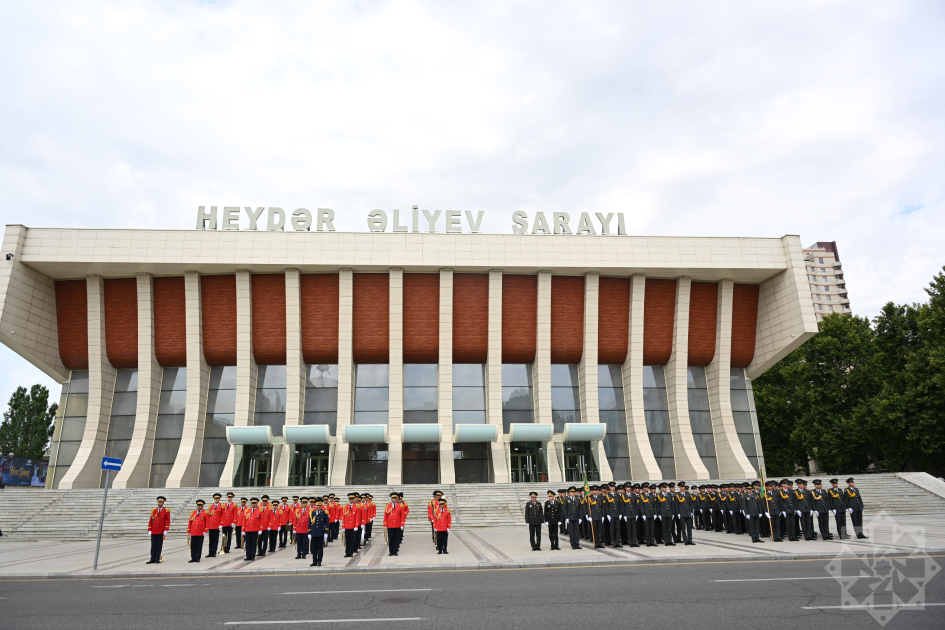

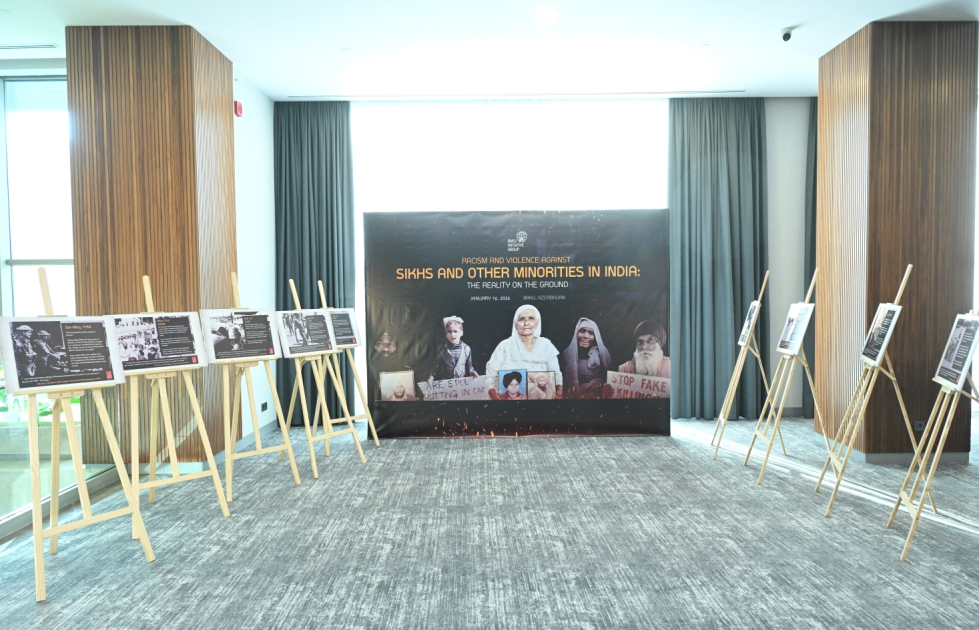
On January 16, an international conference titled "Racism and Violence against Sikhs and Other National Minorities in India: The Reality on the Ground" has started in Azerbaijan for the first time, organized by the Baku Initiative Group and dedicated to the Indian government’s repressive policies against ethnic minorities.
The event is attended by Ramesh Singh Arora, Minister for Human Rights and Minorities of Punjab Province, and other officials, alongside influential representatives of the Sikh community from Canada, the United Kingdom, and the USA, heads of think tanks, scholars from foreign universities specializing in human rights and ethnic minorities, and individuals who have been direct victims of the Indian government's repressive and discriminatory policies.
The conference focuses on the systematic racial discrimination and violence perpetrated by the Indian government against Sikhs and other ethnic minorities, specifically addressing the gross violations of India’s obligations under the UN International Covenant on Civil and Political Rights, the International Convention on the Elimination of All Forms of Racial Discrimination, and the Convention against Torture.
Participants are discussing strategies to keep the current situation on the international agenda, including the investigation of extrajudicial executions by the UN Human Rights Committee and the documentation of rights violations by UN Special Rapporteurs for international monitoring.
The role of international and local NGOs and academic circles is also being examined, specifically regarding how their reports and legal opinions can influence international decision-making mechanisms.
Sikhism, which emerged in the 15th century, promotes complete equality regardless of caste, gender, or language, and thus strictly rejects the traditional Hindu caste system. Today, the Sikh community in India numbers over 25 million, primarily residing in the agricultural region of Punjab.
Reports submitted to international organizations indicate that during the armed raids of 1984 alone, between 8,000 and 17,000 Sikhs were killed, and over 50,000 fled abroad to escape persecution. Throughout the 1980s and 1990s, thousands of Sikhs in Punjab were victims of enforced disappearances or extrajudicial killings based on fabricated charges. Currently, Sikh activists demanding their rights face arrest on charges of "separatism" or "espionage" amid increasing police raids in Punjab. Furthermore, Sikh activists living abroad have been targeted by acts of terrorism, for which official bodies in Canada and the United States have accused Indian intelligence services of involvement.
The majority of the exiled Sikh community now resides in Canada, the UK, the USA, and Australia, where they continue to demand justice for the ongoing political repression in India. The community is calling on the Indian government to officially recognize the 1984 massacres as genocide, establish an independent commission of inquiry, and prosecute the organizers of these atrocities. They also demand clarification on the fate of those who disappeared in the 1980s and 1990s, the release of unlawfully detained activists with the status of political prisoners, and expanded autonomy for Punjab to prevent central government interference. Additionally, they are calling for an end to transnational repression – including assassinations and threats against activists abroad – as well as a formal apology from the Indian government and compensation for the victims of the 1984 massacres.