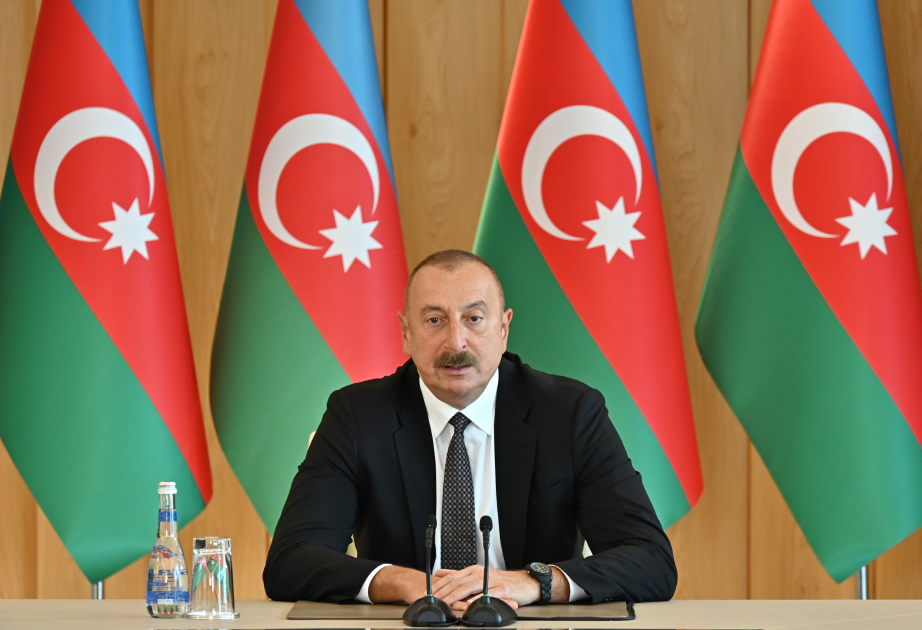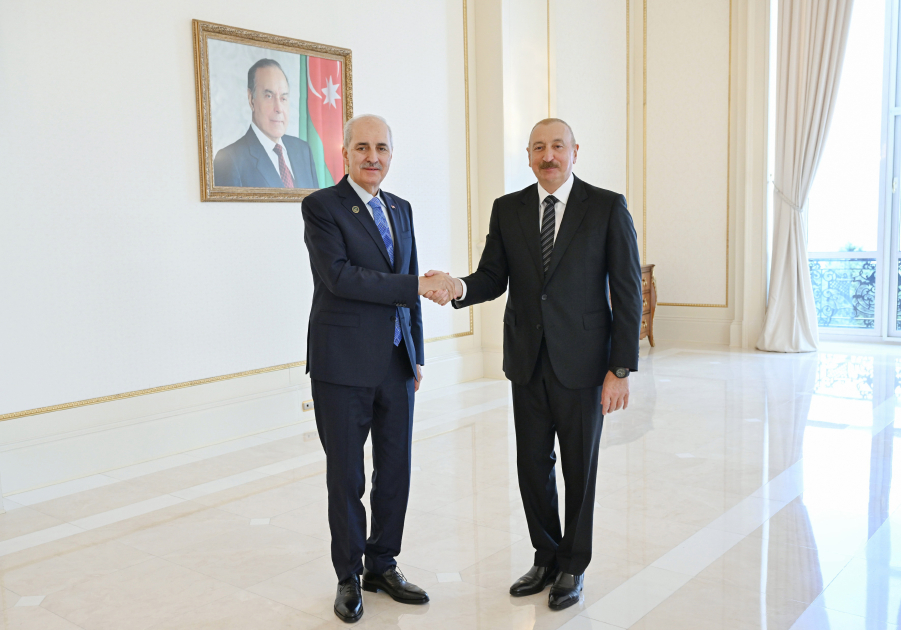

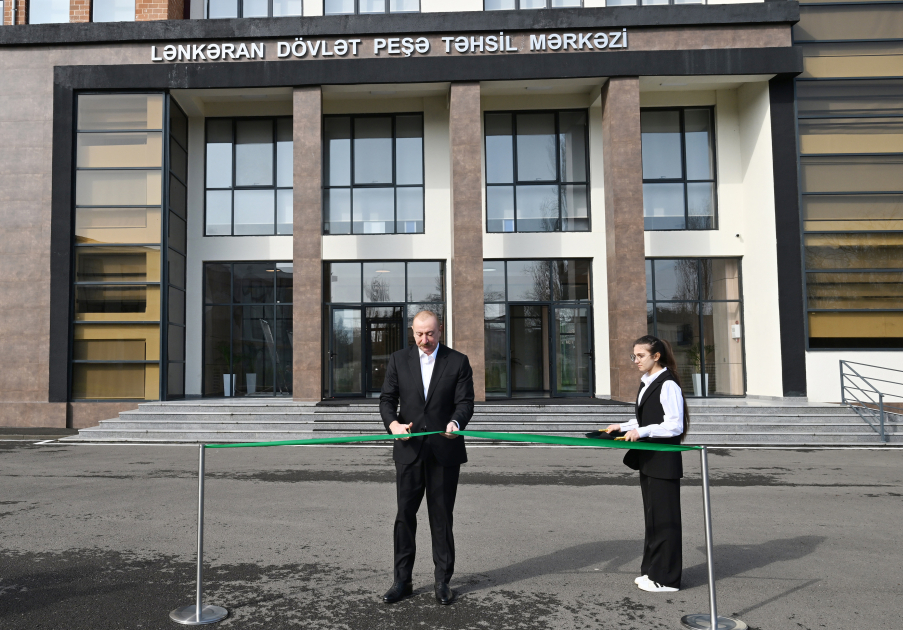
On February 25, President of the Republic of Azerbaijan Ilham Aliyev attended the inauguration of the Lankaran State Vocational Education Center.
Minister of Science and Education Emin Amrullayev briefed the head of state on the facilities created at the Center.
It was noted that the foundation of the institution was laid in 1969 as the Lankaran Technical Vocational School. In 2018, the Lerik Vocational School and Lankaran Vocational Lyceum were merged, and on their basis, the Lankaran State Vocational Education Center was established. Since 2024, the Center has operated as a public legal entity.
Equipped with modern infrastructure, the Center includes training, sports, dormitory, and culinary training buildings, a training guest house, agricultural and workshop laboratories, a greenhouse, as well as auto repair and CNC (computer numerical control) workshops. It also features computer rooms, modern classrooms, a military training room, a library, a 300-seat assembly hall, and a canteen. A dormitory for 53 people has been built on the premises, and following reconstruction, the number of buildings has increased to seven.
In the 2025/2026 academic year, 962 students are enrolled at the Center in 55 groups across 42 specialties, including 385 women. Training is provided in tourism, agriculture, industry, services, IT, and alternative energy.
With the establishment of a new material and technical base, a number of modern specialties are now offered, including maintenance and repair of electric and hybrid vehicles, computer networks and network administration, technical operation of program-controlled industrial equipment, cybersecurity, programming in computer systems, construction and operation of buildings, as well as installation and repair of electrical lines and solar panels.
Students receive education at the levels of initial vocational, technical vocational and higher technical vocational training. Currently, 138 people are employed at the Center.
The Lankaran State Vocational Education Center cooperates closely with nearly 30 public and private sector institutions in personnel training. This cooperation includes joint training programs with the private sector, involvement of industry specialists in teaching, production training, master classes, and the implementation of social and innovative projects.