
A new therapy devised by a team from Ruijin Hospital Affiliated with Shanghai Jiao Tong University School of Medicine has shown remarkable results in reducing the risk of recurrence and mortality in patients with triple-negative breast cancer, according to China Daily.
Data from a nationwide, multi-center Phase III clinical trial led by the team showed that the therapy decreases the risk of postoperative recurrence by 34 percent and mortality by 61 percent, with a three-year disease-free survival rate of 93.1 percent.
The clinical trial, which involved 786 patients from 19 hospitals across the country, also reported a distant metastasis-free survival rate of 95.2 percent and an overall survival rate of 98.3 percent. This new treatment protocol is applicable to the majority of operable patients with this dangerous breast cancer subtype, said the researchers.
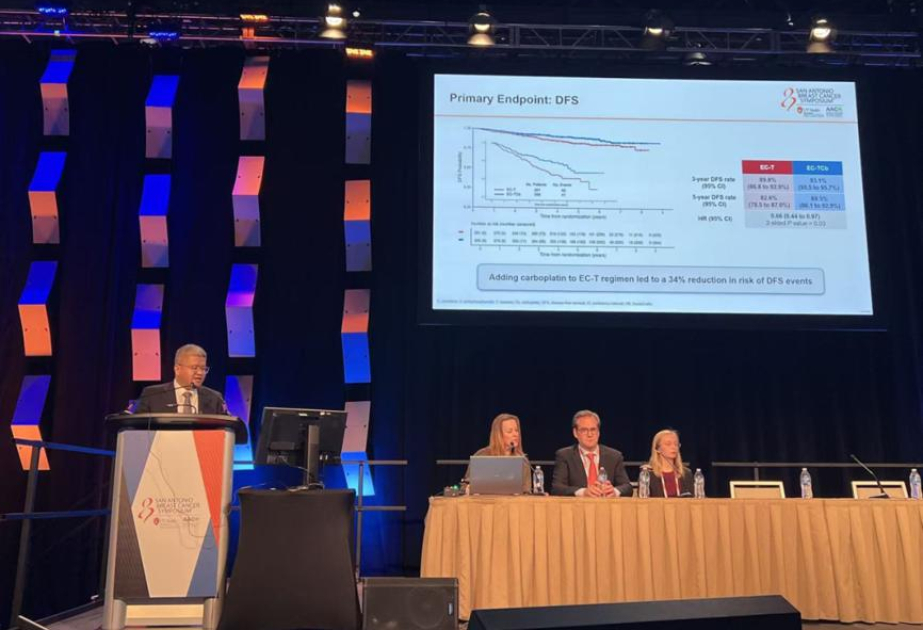
The Ruijin Hospital team recently presented their findings, which mainly involved adding carboplatin to the standard adjuvant chemotherapy regimen, at the San Antonio Breast Cancer Symposium, the largest and most influential conference in the field of breast cancer.
International experts have hailed the study, which began in 2015, as a significant advancement in the adjuvant treatment of early-stage triple-negative breast cancer. They believe that such new therapies could reshape the treatment landscape for the disease, and the research will provide robust clinical data for global practice guidelines.
Triple-negative breast cancer is recognized as a challenging subtype of breast cancer due to its lack of therapeutic targets and high risk of recurrence and metastasis. These factors have made it a particularly difficult area for clinical treatment.