
Jerusalem Post
ByJUDY SIEGEL-ITZKOVICH
Abramowitz founded and directed the Melabev organization, initially a place where volunteers worked with dementia patients whose families wanted to keep their loved ones out of institutions.
Social workers who work with the elderly have many riveting and moving stories to tell about people’s lived experiences and their joys and sorrows. However, as professionals, they are required to protect the privacy of their clients. Nevertheless, by changing names and details, it’s permissible, even mandatory, to share these memorable experiences.
Leah Abramowitz, who was born in Germany and raised in St. Louis, Missouri, made aliyah in 1957. She began her career working with immigrants in the Jerusalem corridor (the largest towns of which are Beit Shemesh, Mevasseret Zion, Abu Ghosh, Tzur Hadassah, and Kiryat Ye’arim) and subsequently in the Negev town of Netivot.
A veteran social worker, Abramowitz lives with her husband, Abe, in the capital’s Jewish Quarter of the Old City.In 1971, she started work in social services at Jerusalem’s Shaare Zedek Medical Center – mainly in the geriatric department, headed by Scottish-born Prof. Arnold Rosin.
A decade later, Rosin and Abramowitz founded and directed the Melabev organization, which was initially a place where volunteers worked with dementia patients whose families wanted to keep their loved ones out of institutions for as long as possible.
It quickly became a highly regarded and innovative service supported by the social services, the Jerusalem Municipality, and the National Insurance Institute (NII). For her work, Abramowitz was granted the Distinguished Citizen of Jerusalem award.
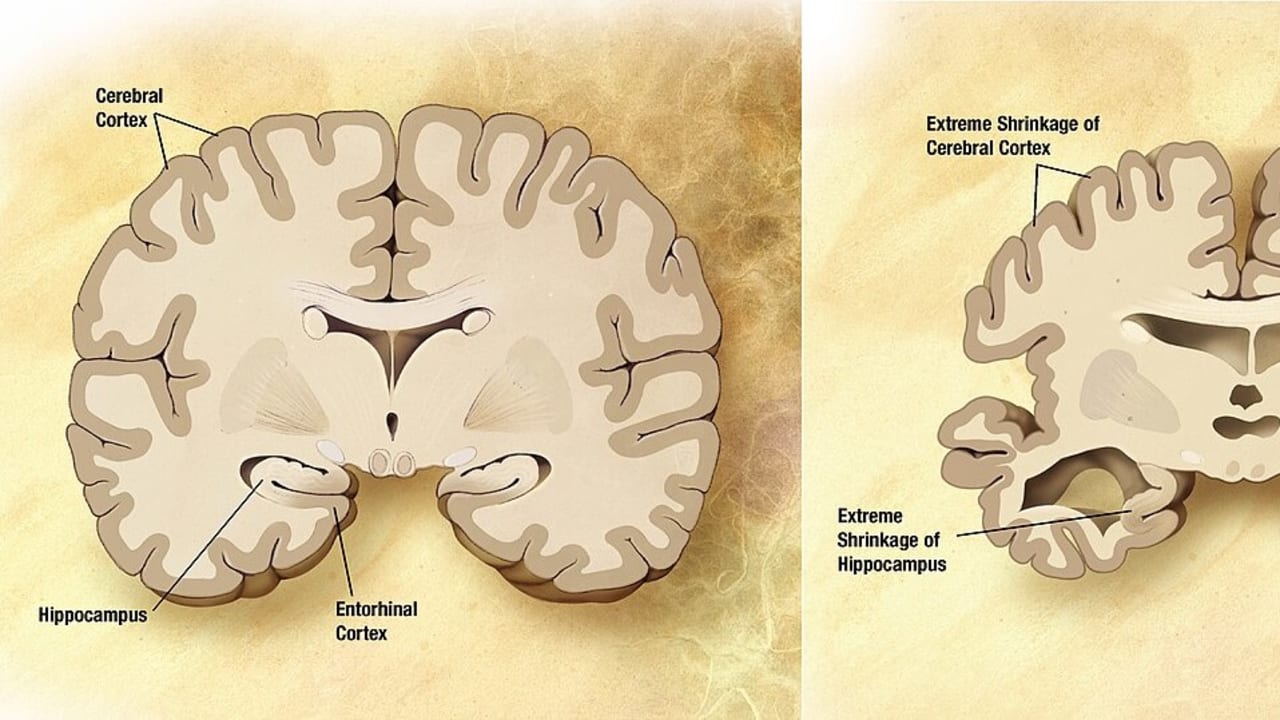
Currently, there are more than 150,000 Israelis living with Alzheimer’s disease or other types of dementia.
Abramowitz wrote Aging in Wellness and Adversity in 2018, in which she shares some of her experiences with her clients.
Following the tragic loss of her grandson Eyal Meir Berkowitz, who fell in battle on October 7, 2023, she decided to have the book translated into Hebrew and illustrated with numerous simple but evocative line drawings that Eyal had left behind.
Story snippets
One of the dozen stories in the book is about a usually mild-mannered elderly man who became extremely unruly when he was brought to the hospital by his relatives after contracting pneumonia. After he attempted to pull out his IV line, the staff put him on a stretcher and tied his arm to the bed.
Abramovitz had finished her shift and was on her way out, but becoming aware of the situation, she asked the relatives about his background.
He was a Polish-born Holocaust survivor who had never been ill, they said.
Abramowitz posited that his hospital encounter had likely rekindled horrible memories from concentration camps in which the sick were sent to the gas chambers, so many of them pretended they were well. She suggested that they put the man in a chair and not wear white coats when around him. The unruly patient was later seen rolling up his sleeve up in a quiet, calm manner and allowing the nurses and doctors to treat him. In another narrative, a volunteer who visited lonely, elderly people with dementia went to see a man who had recently lost his wife. He was at home, slouched in a chair, and didn’t react to the visitor. As it was the fifth night of Hanukkah, the volunteer thought that the man probably had not lit candles, maybe even for years. Preparing a hanukkiah that he had brought from home, the volunteer lit it up and recited the requisite blessings. Hearing this, the man suddenly mumbled “Amen,” and went on to participate in the lighting. Then, reliving his childhood memories, he sang all the verses of “Maoz Tsur” by heart and gave his visitor a bashful smile.
Psychodrama triggers imagination
Psychodrama is often used by social workers and others working with Alzheimer’s patients, as it triggers their imaginations even when memories fade. At one session organized by Abramowitz, the participants were asked to make believe they were entities in a serene, green forest.
Ninety-seven-year-old Avraham said, “I’m the oldest in the forest, but I’m solid and strong. Yankele imagined himself being a turtle that had a protective shell, “which is good because I need protection,” he said. Miriam, who was the most sensitive to noise, said she was an owl: “I’m aware of everything that’s happening while I stand on a branch above the forest.” Ida, who suffered from being overweight, compared herself to a “beautiful, nimble, energetic deer.”
They and other participants imagined that they built a tree house where children could play. They were also given props, such as dolls. The social worker had originally been asked by colleagues whether psychodrama was beyond the capacities of those diagnosed with dementia, but she insisted it wasn’t. “They feel free to communicate as best they can, expressing their deepest emotions – and it reduces their loneliness,” she said.
Sarah eagerly traveled to Safed for the Klezmer Festival. But when crossing the street there, she was hit by a pizza delivery driver on a motorcycle and was rushed to the hospital. Miraculously, no bones were broken, but she was very bruised. A policeman insisted she go to the police station to give evidence against the young man who had driven negligently. He went as well, accompanied by his parents and frightened. “I just got my motorcycle last week, and I didn’t even have time to get insurance. I saw some friends at the side of the street, and I waved to them. I didn’t see you. I’m so sorry!”
Looking straight at him, Sarah said: “I won’t file a police complaint if you agree to three things: That you’ll never drive without insurance; you will volunteer for six months in a hospital’s surgical or rehabilitation department to see what damage is done by careless driving; and you’ll give your parents 10% of what you earn for the tension and worry you caused them.” He gratefully agreed and showed up to volunteer at the hospital.
Abramowitz continues to lead sessions for Alzheimer’s patients and their relatives at Yad Sarah’s Jerusalem headquarters, where she is sure to experience more indelible incidents worth sharing in another book.
The Hebrew version, Ad 120: Sipurim Ketzarim al Arichut Yamim, is available from the author at NIS 45. She can be contacted at: [email protected].
Aging in Wellness and Adversity
By Leah Abramowitz
Mazo Publishers