

In the context of rapidly developing digital technologies and a changing geopolitical reality, cooperation between the European Union and the Eastern Partnership countries is particularly important. Azerbaijan, located at the intersection of regional economic and technological processes, is actively developing its innovation ecosystem and seeking new formats for international cooperation. The country is striving to integrate best global practices to strengthen its position in digital transformation and high technology. At the same time, the experience of European partners is becoming an important reference point for both the public sector and innovative businesses.
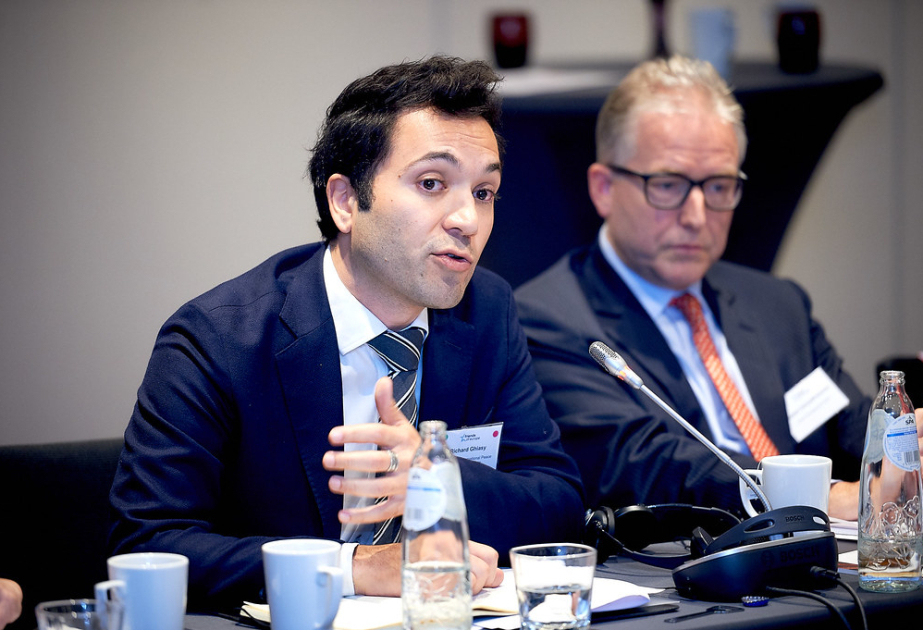
Andrea Castagna, an expert in technology policy and European affairs and an advisor at the Institute of Innovation Management (an international think tank working in the field of digital governance and technology, primarily in the Eastern Partnership countries), answered questions from AZERTAC.
- How can your experience in technology policy and European affairs be applied to supporting digital transformation and the innovation ecosystem in Azerbaijan?
- If we are talking about my personal experience, I believe that highlighting and sharing European success stories and best practices is an effective way to support innovation in a country like Azerbaijan. For example, looking at e-government solutions, countries such as Denmark and Estonia have highly integrated systems that serve citizens and ecosystems very efficiently. This is something that can be shared through international cooperation and various collaborative opportunities. And I believe in international cooperation so I am convinced that it is in the interest of both EU member states and Azerbaijan to learn from each other.
- What forms of international cooperation could be most beneficial for the development of startups and technology initiatives in Azerbaijan?
- Energy is an important area of cooperation between the EU and Azerbaijan. I believe there is significant potential for the development of startups and technology initiatives in Azerbaijan in partnership with European counterparts. In some areas, this is already happening. However, I think there is still a great deal of potential in the fields of renewable energy and carbon-neutral technologies.
Second, drone technologies represent another promising area for cooperation. Of course, there is already substantial high-level collaboration in the military sphere. But when it comes to civilian drone technologies, the EU and Azerbaijan can cooperate extensively at the startup level. I am aware of promising projects in agriculture and infrastructure inspection, as well as work at the component level, for instance in AI for drone navigation and robotics.
- What approaches to managing innovation and digital projects from your experience do you consider applicable to the Azerbaijani context?
- I think that an approach which works quite well in Europe is the Horizon programme, which boosts cooperation in EU research, innovation, competitiveness, and in tackling global challenges like climate change. For the next programmatic cycle starting in 2028, there will be €175 billion available. In this way, even universities, small entities, and startups can access funding.
Unfortunately, for partners from Azerbaijan it is very difficult to join Horizon consortia and obtain Horizon funding, because it is a non-EU and non-associated country. But perhaps this is something that could be discussed at the political and bilateral level in the future between Baku and Brussels. After all, some non-EU countries—such as Türkiye or Egypt—have joined the programme as well.
- What lessons from European initiatives could help Azerbaijan strengthen government support for innovation?
- There are many initiatives linked to the Eastern Partnership, for example through the Eastern Partnership Civil Society Forum, as well as at the bilateral level. Many development agencies from EU member states—such as Germany’s GIZ—promote capacity-building opportunities in areas that can enhance government support for innovation, including reforms in public administration.
Lastly, there are also many opportunities at the sub-national level. I had the opportunity to work at the European Committee of the Regions in the past, which is the institution that connects European local and regional authorities. And I know that the European Committee of the Regions also engages in extensive cooperation with third countries, both within and outside the framework of the Eastern Partnership. This means that local authorities in Azerbaijan can collaborate with European counterparts as well.
- How can Azerbaijan effectively build strategic partnerships with European organizations and investors to develop its technology and innovation ecosystem?
- Sadly, I think that in Europe we have a very limited understanding of the needs of the local ecosystem in Azerbaijan. Connections are scarce, and so are opportunities to collaborate.
The first step for Azerbaijani innovators is to become more visible and vocal in Europe about how and where they need to build partnerships with European counterparts. For example, during forums or within startup networks, Azerbaijani innovators should take the initiative and make themselves more visible.
But of course, innovators and civil society can contribute as well. Azerbaijan’s startup ecosystem is growing fast, and the world needs to see that. Through mapping, accessible data, or PR campaigns, the ecosystem can become more visible and attractive to European partners.
- What key policy elements help create sustainable innovation ecosystems, and how can they be adapted to Azerbaijan?
- We live in strange times, where geopolitical tensions and the emergence of new technologies such as AI are changing the ways we can create sustainable innovation. So what I say now may well change in the next few years. However, I think three elements remain central at the moment.
First, greater investment in education and talent. Azerbaijan is well positioned to invest more in talent development at universities and to attract talent. Through its educational institutions, it can strengthen connections with European counterparts.
Second, access to venture capital. Unfortunately, this remains a challenge in Europe, especially when compared with the United States. But Azerbaijan does have capital, so it could become a hub in the Caucasus for VCs, business angels, and similar investors.
Third, startups and ecosystems flourish when there is stability and a clear legislative framework. Improving transparency and clarity in public administration; supporting a coordinated policy framework—for example in fiscal rules, monetary flexibility, and regulatory reform; and adopting certain European standards on access to justice or anti-corruption can all create a positive cycle for innovation.