
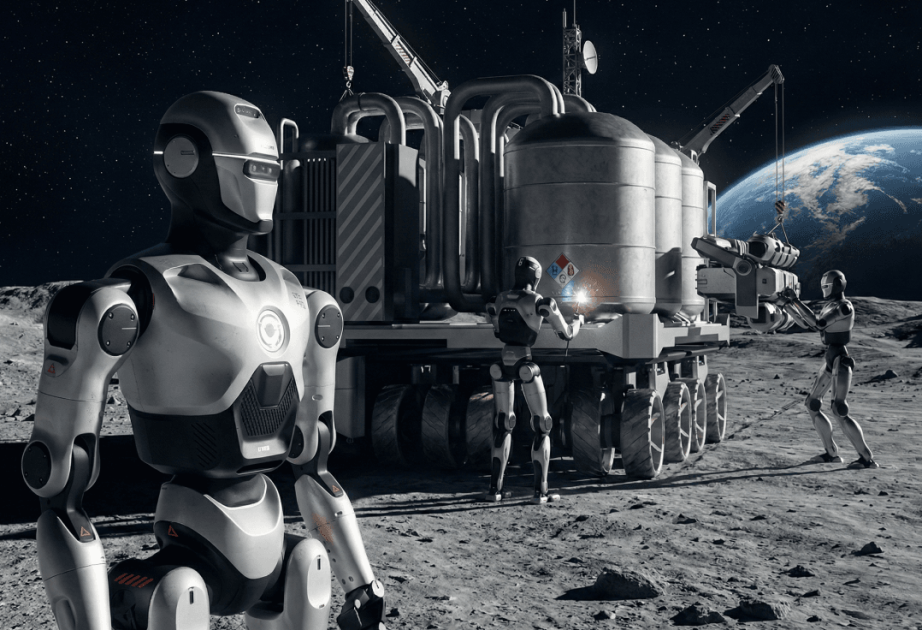
Chinese humanoid robot maker Engine AI has unveiled plans to send a humanoid robot into space, aiming to create the world’s first robot astronaut, according to Interesting Engineering.
The Shenzhen-based company announced that it has partnered with Beijing Interstellar Human Spaceflight Technology, a commercial space firm, to launch the Humanoid Robot Astronaut Exploration Program. The mission will deploy Engine AI’s PM01 humanoid platform, a general-purpose embodied intelligent system featuring high-precision environmental sensors, ultra-fast motion response, and autonomous decision-making capabilities. Last year, EngineAI claimed its PM01 became the first humanoid robot to successfully execute a front flip.
China’s robot astronaut
Engine AI said space exploration places far greater demands on robots than any Earth-based application, requiring exceptional performance stability, environmental adaptability, and autonomous decision-making. Unlike terrestrial settings, space missions expose machines to vacuum conditions, microgravity, extreme temperature swings, and high levels of radiation, pushing robotic systems far beyond conventional operating limits, reports CNEVPost.
To address these challenges, the Shenzhen-based robotics startup said it will work closely with commercial space company Interstellor to further develop the PM01 humanoid robot’s reliability in space environments. The partnership will focus on improving the robot’s adaptability, resilience, and mission execution capabilities, with the long-term goal of enabling PM01 to operate independently during complex space tasks. According to Engine AI, humanoid robots like PM01 could outperform humans in certain space missions by surpassing physiological limits and taking on high-risk roles. These include external maintenance of space stations, exploration of hazardous areas, and long-duration monitoring tasks that could otherwise expose astronauts to significant danger. By deploying humanoid robots for such operations, the company says mission risks for human crews could be substantially reduced, reports Pan Daily.
Both Engine AI and Interstellor said they plan to jointly tackle key technical challenges to position PM01 as the world’s first humanoid robot astronaut. The initiative represents a major step in China’s push to integrate embodied artificial intelligence into space exploration.