
POLITICS
Impact of Baku Turkology Congress on Turkic identity discussed in Antalya
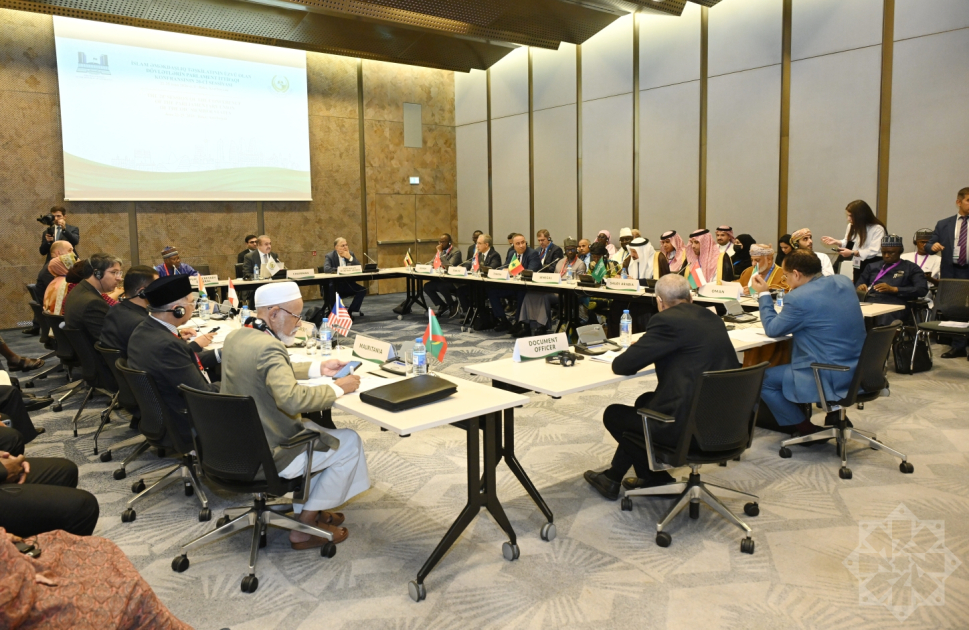
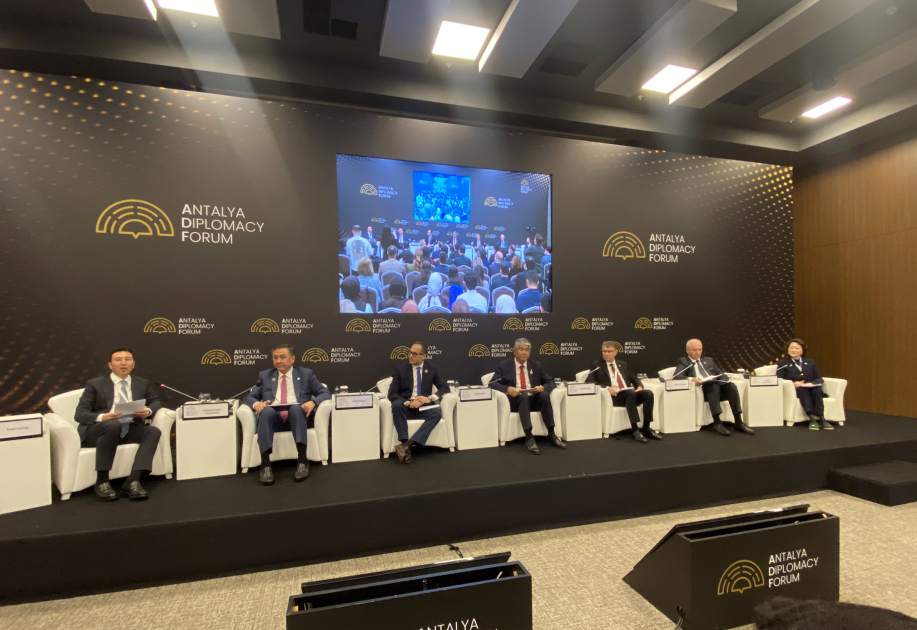
A panel session titled “A Century of Language and Identity: From Baku Turkology Congress to Turkic Integration” was held on the sidelines of the 5th Antalya Diplomacy Forum.
At the session dedicated to the 100th anniversary of the Congress, participants including Secretary General of the Organization of Turkic States (OTS) Kubanychbek Omuraliev, President of the International Turkic Academy Shahin Mustafayev, President of the Turkic Culture and Heritage Foundation Aktoty Raimkulova, Secretary General of TÜRKSOY Sultan Raev, Secretary General of TÜRKPA Ramil Hasan, and President of the Turkish Language Association Osman Mert shared their views on the topic.
In his speech, the Secretary General of the OTS described the Baku Turkology Congress not only as a large gathering of scholars but also as a historic and intellectual milestone that laid the foundation for the Turkic world integration observed today.
He noted that the congress was the first platform to promote the idea of unity both at the scientific and practical levels. In this regard, the principle of “unity in language, thought, and action” put forward by Ismail bey Gaspirali remains one of the main guiding ideas that retains its relevance today.
Shahin Mustafayev, in turn, emphasized that the First Turkology Congress held in Baku in 1926 was an extremely important event in the history of the Turkic world. He stressed the necessity of taking into account the historical-political context and conditions of that period to better understand and correctly evaluate the historical significance of this event.
“For the first time in Turkic history, within the framework of this congress, representatives of Turkic peoples from Siberia to Crimea, from Anatolia to other vast geographies came together. They gained the opportunity to freely express their views on common culture, language, history, and the future. At the same time, important decisions were made regarding the development of the idea of Turkism and the future of the Turkic world,” Shahin Mustafayev said.
Aktoty Raimkulova noted that the resolutions of the First Turkology Congress already emphasized the need for serious attention to the study and protection of the material and cultural monuments of Turkic peoples, the proper registration and documentation of ancient heritage, and the urgent implementation of measures to protect many monuments that were at risk of destruction.
Highlighting that this is a very important indicator of ownership and continuity, she said: “Many initiatives we are implementing today are based on ideas put forward by prominent scholars and intellectuals of that period almost a century ago.”
The Secretary General of TÜRKSOY stated that UNESCO’s designation of December 15 as World Turkic Language Family Day is an important step that strengthens the global recognition of Turkic heritage, Turkic languages, and cultural unity.
Recalling that this decision was adopted at UNESCO’s General Conference held in Samarkand last November, Sultan Raev emphasized that the Turkic language, as a symbol of common cultural and spiritual values, also stands at the forefront as an indicator of unity.
“The path started by prominent scholars and intellectuals working in the field of Turkology is being successfully continued today by our heads of state and the Organization of Turkic States. Today we are happy that we participate freely in such panels, live under our own flags, breathe freely, and take pride in being Turks. These achievements did not come easily. The people who expressed these ideas in 1926 later faced pressures,” said Ramil Hasan, Secretary General of the Turkic Parliamentary Assembly (TURKPA).
He added: “We must not forget that we are talking about a congress that began on February 26 and ended on March 5, with the participation of 131 delegates. Of them, 92 were registered as Turks, and 3 as ‘Turks from Türkiye.’ Thus, in total, we are talking about 95 Turks among the delegates, 92 of whom were Turks living within the Soviet Union. This fact clearly shows one thing: we are not part of the plans of various nations — we are the children of the same nation, we are Turks.”
The President of the Turkish Language Association noted in his speech that although the level of mutual intelligibility between the dialects of Turkic-speaking republics varies, approximately 85 percent of the vocabulary is common. Moreover, almost 100 percent of the root words of Turkic languages are shared.
He emphasized that alphabet unity will make these invisible cultural factors visible and make the commonalities more clearly felt.
“Alphabet unity will particularly make our sense of identity more visible and elevate our common values to a more tangible level,” he said.
The panel session dedicated to the 100th anniversary of the Congress, organized on the initiative of the Turkish Ministry of Foreign Affairs, was evaluated as an example of the unity of the Turkic world and a historic gathering.