
DAYS OF SORROW
Azerbaijan commemorates 34th anniversary of Khojaly genocide: 26 February 1992
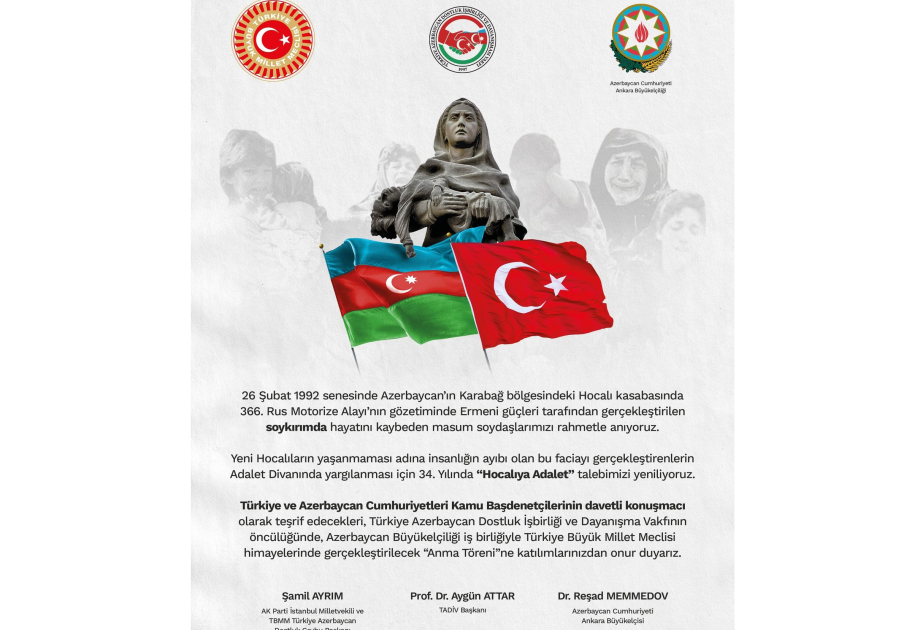
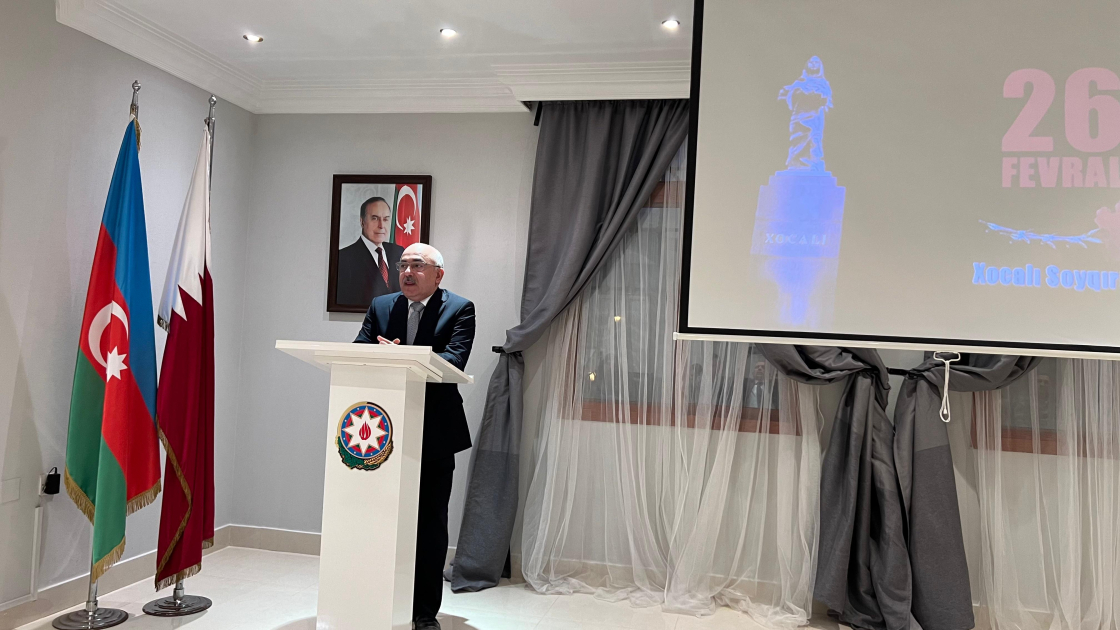
Today, marks the 34th anniversary of the Khojaly genocide, which is one of the gravest crimes committed as part of Armenia’s policy of occupation and genocide against Azerbaijan.
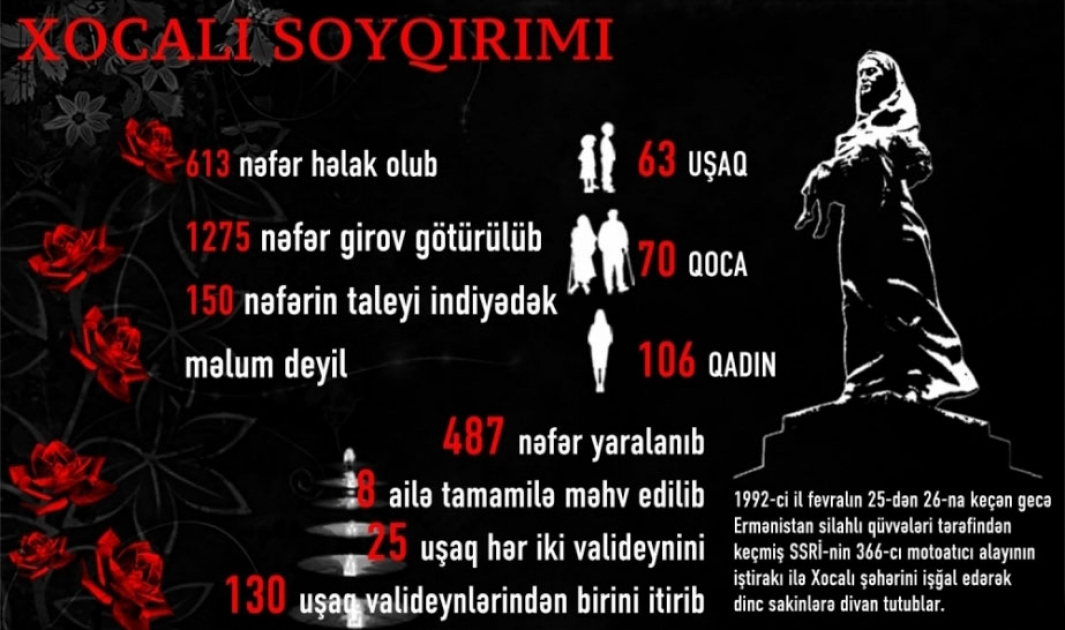
On the night of 25-26 February 1992, Armenian armed forces attacked the town of Khojaly with the support of the 366th motorized rifle regiment of the former USSR and brutally massacred the civilian population. A total of 613 residents of the city, including 63 children and 106 women, were brutally murdered, with 1,275 people taken prisoner and subjected to torture. The fate of 150 individuals remains unknown. As a result of this act of genocide, eight families were completely destroyed, 25 children lost both parents, and 130 children lost one parent.
Other manifestation of this policy pursued by Armenia was ethnic cleansing committed against Azerbaijanis in early 1990s in Baganis Ayrim village of Gazakh district and Imarat Gharvand, Tugh, Selaketin, Khojavand, Karkijahan, Jamilli, Meshali, Akhullu, Nabilar, Hasanabad, Gaybali, Malibayli, Yukhari and Ashaghi Gushchular villages in Garabagh. In addition, during the occupation of Garadaghli village of Khojavand district and Aghdaban village of Kalbajar district, many civilians, including children, women, and the elderly, were tortured to death, dozens of civilians were taken hostage and went missing.
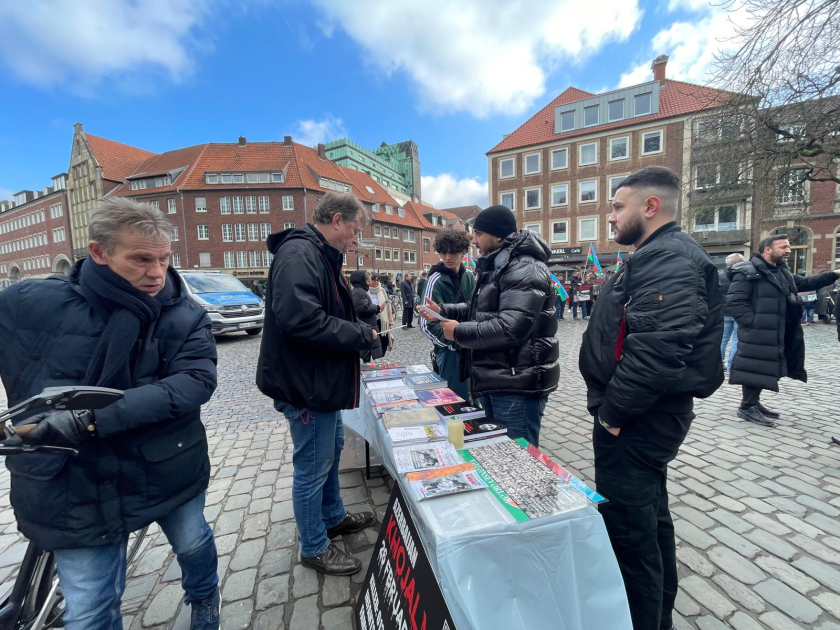
For Azerbaijanis, the Khojaly genocide is more than a historical event – it is a collective trauma that shapes their identity and worldview. Azerbaijan has tirelessly sought international recognition, framing it as a crime against humanity akin to the atrocities of Khatyn, Hiroshima, or Srebrenica.
This tragedy elicited an international outcry. A number of national parliaments, international organizations, eminent international lawyers, foreign journalists, human rights activists and international non-governmental organizations condemned the slaughter in Khojaly as an act of genocide or a crime against humanity.
The real essence of this horrific massacre, which occurred in front of the eyes of the world, was uncovered only after national leader Heydar Aliyev`s coming to political power in 1993. In February 1994, the Milli Majlis of the Republic of Azerbaijan gave a political and legal assessment to Khojaly genocide, declaring 26 February as the Day of Genocide of Azerbaijanis to commemorate genocides committed against the Azerbaijanis throughout history.
In 2020, thanks to the wise and far-sighted policy of Supreme Commander-in-Chief, President Ilham Aliyev and the bravery of the powerful Azerbaijani Army, historical justice was established in the 44-day Patriotic War. As a result of local anti-terrorist measures conducted in September 2023, Azerbaijan fully restored its territorial integrity and sovereignty, and the town of Khojaly was cleared of separatists. On October 15, 2023, President Ilham Aliyev raised the national flag of Azerbaijan in the town of Khojaly.
Under the instructions of President Ilham Aliyev, Azerbaijan launched the first phase of relocation to Khojaly in May 2024 as part of the “Great Return” Program to the liberated territories.
Like in other liberated territories, today life returns to Khojaly, with the large-scale reconstruction and reconstruction work underway, and the “Great Return” Program being successfully implemented.
On the 34th anniversary of the Khojaly genocide, we once again honor the dear memory of the innocent victims of the tragedy.