
Jerusalem Post
ByDR. DALIT DRAIMAN-MEDINA
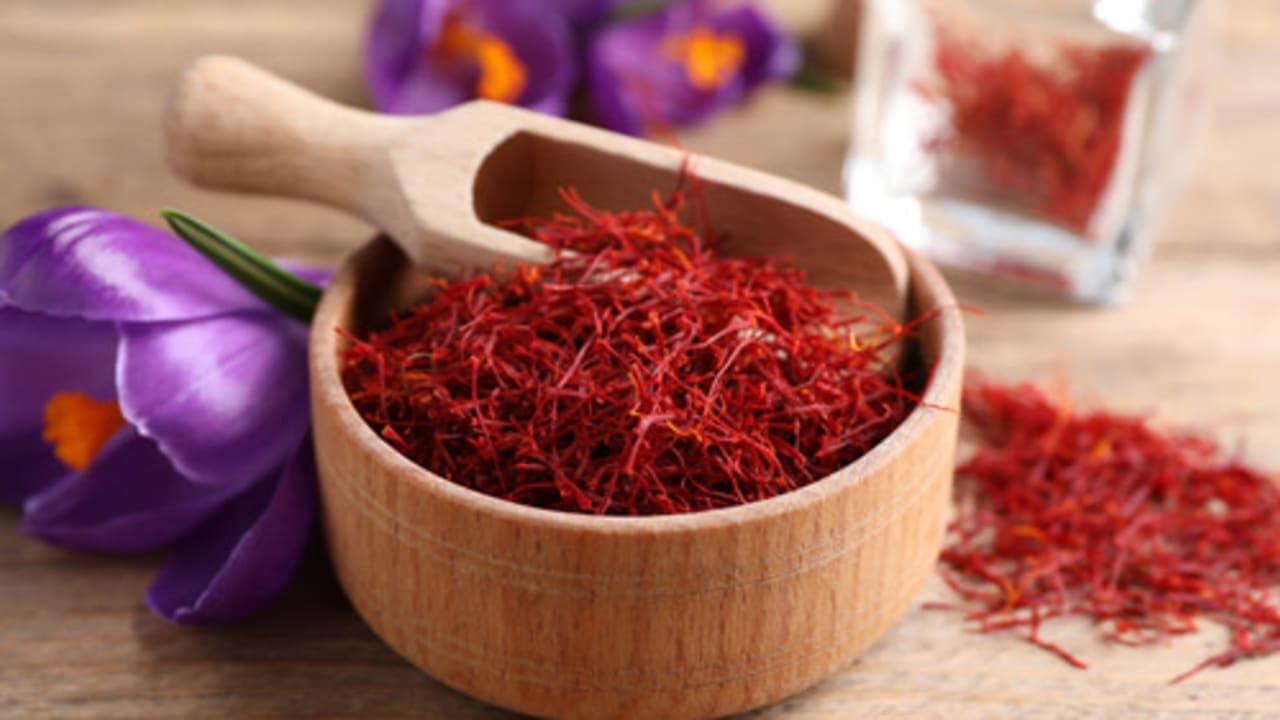
Most people know saffron as an expensive spice with a strong color and a distinctive aroma. But in recent years researchers have been studying it for a completely different reason: It may contain active compounds that can affect common diseases such as depression, Alzheimer’s, diabetes, heart disease and even cancer.
A new scientific review published in the journal Pharmaceuticals compiled dozens of studies on saffron and its active compounds. According to the researchers, saffron has very interesting medical potential, but it is still too early to present it as a proven treatment. That is, it is not a "miracle drug", but it is also no longer just a spice for the kitchen.
Scientific interest in saffron focuses on several active compounds found in it, mainly crocin, crocetin and safranal. These compounds have been linked in studies to effects such as reducing inflammation, protecting against oxidative damage, affecting nerve cells, and also improving processes related to sugar, blood lipids and blood vessel function.
In simple terms, researchers believe that saffron may affect deep mechanisms in the body related to aging, inflammation and chronic diseases. One of the most intriguing areas is brain health.
According to the review, various studies found that compounds in saffron may have a protective effect in conditions such as Alzheimer’s, Parkinson’s, multiple sclerosis, stroke and depression. In Alzheimer’s models, for example, the active compounds in saffron were linked to a reduction in damage caused by problematic proteins in the brain, a decrease in inflammation and an improvement in cognitive function. Even in Alzheimer’s patients, in small studies, a decrease was observed in some markers of inflammation and oxidative stress after taking saffron.
There is also particular interest in the field of depression. Several clinical studies reviewed showed that saffron may alleviate symptoms of depression, and in some cases an effect similar to that of certain antidepressant medications was found. Researchers explain that this may be related to an effect on substances in the brain such as serotonin and dopamine, as well as on mechanisms related to oxidative stress and the health of nerve cells.
But saffron is not only interesting because of the brain.
A natural anti-cancer agent
The review also found evidence that it may positively affect the heart and metabolism. In animal studies and in some human studies, saffron was linked to improvement in lipid profile, reduction of oxidized LDL cholesterol, decrease in inflammation markers, improvement in insulin sensitivity and improvement in blood sugar balance.
The meaning is that in the future saffron may be examined not only as a "natural" supplement, but as a substance that can be integrated into the treatment of heart disease, prediabetes or diabetes. However, it is very important to emphasize: This still does not mean that proven medical treatment can be replaced with saffron.
Interesting findings were also found in the field of cancer. In laboratory models and in animals, compounds in saffron were able to inhibit the growth of cancer cells, encourage the death of damaged cells, and in some cases even increase sensitivity to chemotherapy. These findings were observed in different types of cancer, including breast, colon, prostate, stomach and liver cancer.
But here we need to stop and put things into proportion: Most of the evidence in the field of cancer comes from laboratory experiments and animal studies. This is scientifically important, but it still does not mean that saffron has been proven as a treatment for cancer in humans.
So if saffron is so promising, why is it still not part of conventional medicine?
There are still quite a few open issues. One of the main ones is the issue of absorption. One of the main compounds in saffron, crocin, is not well absorbed in its original form. In the body it is converted into another compound, crocetin, which is better absorbed and is probably responsible for some of the effects. Researchers explain that today there are attempts to develop more advanced forms of saffron administration, in order to improve its absorption in the body and make its effect more stable and effective.
Advertisement
Another problem is that there is still no uniformity between studies. Not all studies used the same type of saffron, the same dosage or the same extraction method. Therefore, it is very difficult to compare the results and say with certainty what really works, in what quantity, and for which conditions.
That is, the message of this review is not "Run to buy saffron", but something much more balanced.
On the one hand, it is clear that saffron is much more than a spice. According to the body of research collected so far, it contains active compounds that arouse real interest in medicine, especially in the context of the brain, inflammation, sugar, the heart and even cancer research. The entire review paints a broad picture according to which saffron may have diverse effects: Reducing inflammation, protecting against oxidative damage, supporting the nervous system, affecting blood sugar and lipid levels, and perhaps also potential to inhibit cancer processes.
On the other hand, large, high-quality and long-term clinical studies are still lacking that will show whether this promise באמת translates into real medical treatment. Until that happens, saffron remains a very intriguing natural substance, with great potential, but also with quite a few question marks.
Bottom line: Saffron has long been of interest not only to chefs. Now the medical world is also beginning to take it seriously.
Dr. Dalit Draiman-Medina is a specialist in family medicine and integrative and functional medicine