
Jerusalem Post
ByJUDY SIEGEL-ITZKOVICH
The treatment, administered at Schneider Children’s Medical Center of Israel in Petah Tikva, is a major milestone in the development of precision genetic therapies for rare neurological disorders.
An eight-month-old infant with a rare but devastating genetic epilepsy has become the first patient in the world to receive an experimental gene replacement therapy designed to restore the function of the WWOX gene directly in the brain.
The treatment, administered at Schneider Children’s Medical Center of Israel in Petah Tikva, is a major milestone in the development of precision genetic therapies for rare neurological disorders.
The family didn’t want to allow a photo or to disclose their names or the baby’s gender.
Advertisement
There have been only 60 to 90 genetically confirmed cases identified worldwide in medical literature until now, making it an “ultra-orphan disease.”
The breakthrough treatment was made possible by years of research led by Hebrew University of Jerusalem (HUJI) scientist Prof. Rami Aqeilan.
Conceptual illustration of AAV9-mediated delivery of the WWOX gene to neurons, representing the first clinical use of a gene replacement therapy designed to restore WWOX function in the brain of an infant with WOREE syndrome. (credit: Hebrew University of Jerusalem/ AI-generated illustration)
'Power of scientific discovery, clinical excellence, and international collaboration'
“This moment represents the culmination of many years of basic and translational research. What began as an effort to understand the biological function of a gene has evolved into a potential therapeutic strategy for children affected by one of the most severe forms of genetic epilepsy,” he said.
Advertisement
“This achievement demonstrates the power of combining scientific discovery, clinical excellence, and international collaboration,” he added. “It highlights how fundamental research can advance from the laboratory toward potential new treatment options for patients with rare genetic diseases.”
WWOX-related epileptic encephalopathy (WOREE syndrome) is a condition that develops only when a person inherits two mutated gene copies – one from each parent. If he or she inherits only one mutated gene, they are called a carrier and usually show no symptoms, but they can pass the mutation to their children. It’s characterized by drug-resistant epileptic seizures, profound intellectual disability, and psychomotor delays.
Advertisement
Respiratory complications (including aspiration pneumonia, respiratory insufficiency) are the leading cause of premature death; the average lifespan for severe cases is generally between two and four years of age.
While WWOX is well-known as a tumor suppressor, it also plays a vital role in neuronal development and the dynamic regulation that keeps the brain's internal environment stable and functioning optimally. This involves balancing temperature, ion levels, and energy, and plays a broader role in regulating the body’s overall systemic equilibrium.
Other common symptoms include severe hypertonia (tight, rigid muscles), ataxia (poor coordination), progressive microcephaly (when a child’s head circumference is smaller than normal at birth or becomes disproportionately smaller over time because the brain stops growing.
Advertisement
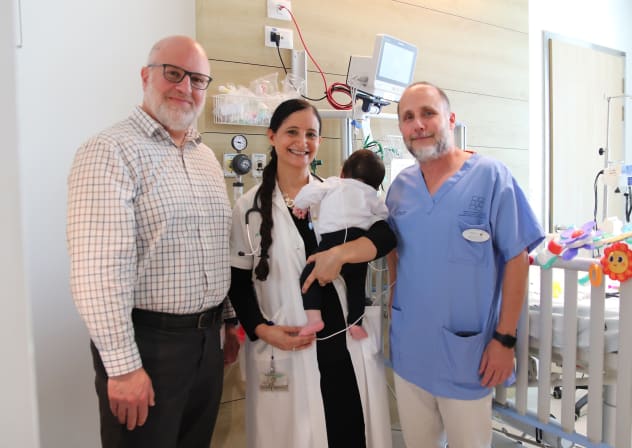
Aqeilan of HUJI’s Faculty of Medicine’s Lautenberg Center for Immunology and Cancer Research brought together scientists, clinicians, and biotechnology leaders from Israel and the US, including Dr. Naama Orenstein and Dr. Dror Kraus of Schneider and Dr. Yael Weiss, who is CEO of Mahzi Therapeutics in San Francisco.
Mahzi is focused on treating underserved rare genetic neurodevelopmental disorders. Based on the Greek word for “Together,” Mahzi unites patient and family groups, academic researchers, other industry members, and its internal team of experts to develop therapies for patients with these serious diseases.
WOREE syndrome, early-onset, drug-resistant epilepsy with high risk of death
The infant seemed to be healthy at birth, but began experiencing severe epileptic seizures at six weeks of age. Genetic testing revealed a rare inherited defect in the WWOX gene, causing WOREE syndrome (WWOX-related epileptic encephalopathy), a devastating disorder characterized by early-onset, drug-resistant epilepsy, profound developmental impairment, and a high risk of premature death.
While the specific mutation treated in this case is particularly prevalent among individuals of Yemeni Jewish ancestry, many disease-causing variants of the WWOX gene have been identified worldwide. These mutations similarly impair WWOX function and are associated with severe neurodevelopmental disorders, including WOREE syndrome.
Although WWOX was originally studied for its role in cancer biology, Aqeilan's research revealed that the gene is also essential for normal brain development and neurological function.
Using genetically engineered mouse models lacking WWOX expression in the brain, his lab showed that loss of the gene causes severe neurological abnormalities, including epilepsy, developmental delay, defective myelination, and premature death—closely mirroring the symptoms observed in children with WOREE syndrome.
Building on these findings, the research team developed a gene replacement strategy using an adeno-associated viral vector (AAV9) to deliver a healthy copy of the WWOX gene to neurons.
In preclinical studies, a single administration restored WWOX expression and improved seizures, neurological deficits, growth abnormalities, and survival in animal models, providing proof-of-concept for a therapeutic approach to WWOX-related disease.
Following years of academic research and development, the technology was licensed to Mahzi Therapeutics, which advanced the program by manufacturing the clinical-grade gene therapy vector and supporting translational and regulatory activities.
Advertisement
After Dr. Orenstein and her colleagues initiated a compassionate-use program for the child, and following extensive preparation and regulatory approvals, the therapy was administered directly into the infant's brain.
One month after treatment, the child remained clinically stable and was discharged from the hospital. No recurrence of the severe seizures that had previously threatened his development and survival had been reported during this initial observation period. Long-term clinical follow-up will be required to evaluate the safety and efficacy of the treatment.
The breakthrough builds upon a body of internationally recognized research from Aqeilan's laboratory that established WWOX as a critical regulator of nervous system development and function.
The work has helped lay the foundation for new therapeutic approaches to rare genetic neurological disorders and has received international support, including a European Research Council Proof-of-Concept grant aimed at advancing WWOX gene therapy toward clinical application.
While the infant will continue to be closely monitored, the treatment represents an important step in the development of personalized therapies for rare genetic epilepsies and offers hope for families affected by WWOX-related disorders worldwide.